





Deep Learning in Cancer Diagnostics, A Feature-based Transfer Learning Evaluation
27/08/2026deep learning in cancer diagnostics a featurebased transfer learning evaluation
Deep learning in cancer diagnostics focuses on utilizing advanced machine learning techniques to improve the accuracy of cancer detection. This innovative approach is crucial for enhancing diagnostic processes in healthcare, providing more effective solutions for cancer treatment.
Introduction with deep learning in cancer diagnostics
As the healthcare industry continues to evolve, the integration of artificial intelligence (AI) and machine learning into medical diagnostics has become increasingly significant. One of the most promising areas of this technological advancement is the application of deep learning in cancer diagnostics. This method utilizes complex algorithms and vast datasets to identify patterns and anomalies in medical images and patient data, ultimately aiding in more accurate cancer detection and diagnosis. The book “Deep Learning in Cancer Diagnostics: A Feature-Based Transfer Learning Evaluation” explores these innovative approaches, highlighting their potential to transform how cancer is diagnosed and treated.
What is deep learning in cancer diagnostics?
Deep learning in cancer diagnostics refers to the use of artificial intelligence, particularly deep learning algorithms, to analyze medical data for the purpose of identifying cancerous conditions. This technique falls under the broader category of machine learning, where systems learn from data and improve their performance over time without explicit programming. In cancer diagnostics, deep learning models are trained on large datasets of medical images (such as MRI scans, CT scans, and pathology slides) to recognize signs of cancer that may not be visible to the human eye.
For what it serves and what problems it can solve
The primary purpose of deep learning in cancer diagnostics is to enhance the accuracy and speed of cancer detection. Traditional diagnostic methods often rely on human interpretation, which can lead to variability and potential errors. By employing deep learning techniques, healthcare professionals can achieve:
- Improved diagnostic accuracy: Deep learning algorithms can analyze complex data patterns, leading to more precise identification of cancerous tissues.
- Early detection: Enhanced imaging and data analysis can facilitate earlier diagnosis, which is critical for successful treatment outcomes.
- Standardization: AI-driven diagnostics reduce variability in interpretations, providing a more consistent approach to cancer detection.
- Efficiency: Automated systems can process vast amounts of data quickly, allowing for faster decision-making in clinical settings.
- Support for healthcare professionals: AI tools can assist radiologists and oncologists in making informed decisions by providing additional insights based on data analysis.
How it works in practice
The implementation of deep learning in cancer diagnostics involves several key steps:
- Data collection: Large datasets of medical images and patient information are gathered for training the deep learning models.
- Preprocessing: The collected data undergoes preprocessing to enhance quality and remove any noise or irrelevant information.
- Model training: Deep learning algorithms are trained on the processed data, learning to recognize patterns associated with different types of cancer.
- Validation: The trained models are validated using separate datasets to assess their performance in real-world scenarios.
- Deployment: Once validated, the models can be integrated into clinical workflows, assisting healthcare professionals in making diagnostic decisions.
Main benefits
- Enhanced diagnostic precision through advanced pattern recognition.
- Reduction in false positives and negatives in cancer detection.
- Increased speed of diagnosis, leading to timely treatment interventions.
- Ability to analyze large datasets, making it feasible to manage vast amounts of patient data.
- Support for personalized medicine by identifying unique cancer characteristics in individual patients.
For whom it is indicated
Deep learning in cancer diagnostics is particularly beneficial for:
- Healthcare professionals: Radiologists, oncologists, and pathologists can leverage AI tools to improve diagnostic accuracy and efficiency.
- Medical researchers: Those studying cancer can use data-driven insights to advance their research and develop new treatment protocols.
- Patients: Individuals undergoing cancer screening or treatment can benefit from more accurate and timely diagnoses, leading to better health outcomes.
- Healthcare institutions: Hospitals and clinics can enhance their diagnostic capabilities, improving patient care and operational efficiency.
Differentials and points that deserve attention
While deep learning offers significant advantages in cancer diagnostics, there are also important considerations:
- Data quality: The effectiveness of deep learning models heavily relies on the quality and diversity of the training data.
- Model transparency: Understanding how AI models arrive at their conclusions can be challenging, necessitating further research into explainable AI.
- Integration challenges: Implementing AI tools into existing clinical workflows may require adjustments and training for healthcare staff.
- Regulatory considerations: As with any medical technology, compliance with healthcare regulations and standards is crucial.
- Ongoing research: The field is rapidly evolving, and continual updates and adaptations of models are necessary to keep pace with new findings.
Is it worth it? Product analysis within the presented proposal
The book “Deep Learning in Cancer Diagnostics: A Feature-Based Transfer Learning Evaluation” presents a thorough exploration of how deep learning can reshape cancer diagnostics. Given the growing need for improved diagnostic methods in healthcare, investing in understanding and implementing these technologies can be valuable. However, it is essential to approach this field with realistic expectations, recognizing that while deep learning can enhance diagnostic capabilities, it is not a panacea for all challenges in cancer detection.
Frequently asked questions about deep learning in cancer diagnostics
- What is deep learning in cancer diagnostics? Deep learning in cancer diagnostics refers to the use of AI algorithms to analyze medical data for identifying cancerous conditions.
- How does deep learning improve cancer detection? By recognizing complex patterns in medical images, deep learning enhances accuracy and reduces diagnostic errors.
- What are the benefits of feature-based transfer learning? Feature-based transfer learning allows models to apply knowledge gained from one dataset to another, improving performance with limited data.
- What are the applications of AI in healthcare? AI can assist in diagnostics, treatment planning, patient monitoring, and operational efficiencies within healthcare settings.
- Is deep learning effective in cancer diagnosis? Yes, studies have shown that deep learning can significantly improve diagnostic accuracy and speed.
- Are there limitations to using deep learning in cancer diagnostics? Yes, challenges include data quality, model transparency, and integration into clinical workflows.
- How can I learn more about deep learning in cancer diagnostics? Reading the book “Deep Learning in Cancer Diagnostics: A Feature-Based Transfer Learning Evaluation” is a great start for understanding this innovative field.
Conclusion
Deep learning in cancer diagnostics represents a significant advancement in the field of medical technology, offering the potential to improve diagnostic accuracy and efficiency. By understanding its applications and benefits, healthcare professionals and institutions can better prepare for the future of cancer detection. If you are interested in exploring this topic further, consider accessing the book “Deep Learning in Cancer Diagnostics: A Feature-Based Transfer Learning Evaluation” to gain deeper insights into this transformative approach.
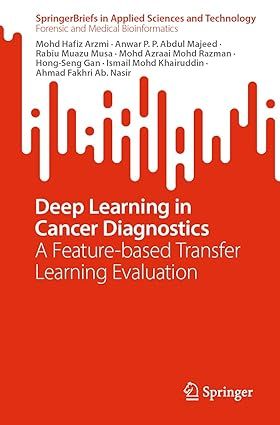
Deep Learning in Cancer Diagnostics, A Feature-based Transfer Learning Evaluation
Gostou do que leu? Veja o produto relacionado a este artigo.
Ver produtoFeatured Articles
Siga nosso instagram

