





Deep Learning in Cancer Diagnostics, A Feature-based Transfer Learning Evaluation
28/08/2026deep learning in cancer diagnostics a featurebased transfer learning evaluation
Deep learning in cancer diagnostics refers to the application of advanced algorithms designed to analyze medical data for the identification and diagnosis of cancer. This innovative technology aims to enhance the accuracy of cancer detection, ultimately leading to improved patient outcomes through superior diagnostic tools.
Introduction with deep learning cancer diagnostics
In recent years, the field of healthcare has witnessed a remarkable transformation, largely driven by advancements in technology. Among these advancements, deep learning cancer diagnostics stands out as a revolutionary approach that employs sophisticated algorithms to analyze vast amounts of medical data. This technology addresses critical challenges in cancer detection, aiming to provide more accurate diagnoses and better patient care. As healthcare professionals strive to enhance diagnostic precision, understanding the role of deep learning becomes increasingly vital.
What is deep learning cancer diagnostics?
Deep learning cancer diagnostics refers to a subset of artificial intelligence that utilizes neural networks to process and interpret complex medical data. By leveraging large datasets, these algorithms can identify patterns and anomalies that may not be readily apparent to human observers. The primary goal of this technology is to improve the accuracy and efficiency of cancer diagnosis, enabling healthcare providers to make more informed decisions regarding patient treatment.
For what purpose does it serve and what problems can it solve?
The primary purpose of deep learning in cancer diagnostics is to enhance the early detection and diagnosis of cancer. Traditional diagnostic methods can be time-consuming and may rely heavily on human interpretation, which can lead to inconsistencies. Deep learning algorithms can analyze medical images, lab results, and patient histories at an unprecedented scale, identifying potential cancerous conditions more swiftly and accurately. This technology addresses several key challenges:
- Reducing diagnostic errors that can lead to delayed treatment.
- Improving detection rates of various types of cancer.
- Streamlining the diagnostic process, allowing for quicker patient management.
- Facilitating personalized treatment plans based on accurate diagnoses.
How does it work in practice?
The functioning of deep learning cancer diagnostics involves several key steps:
- Data Collection: Large datasets comprising medical images, patient records, and lab results are gathered.
- Preprocessing: The data is cleaned and prepared for analysis, ensuring that it is suitable for training the algorithms.
- Model Training: Neural networks are trained using the prepared datasets. This process involves adjusting the model parameters to minimize errors in predictions.
- Evaluation: The trained model is then tested on separate datasets to evaluate its accuracy and effectiveness in diagnosing cancer.
- Implementation: Once validated, the model can be integrated into clinical settings to aid healthcare professionals in diagnosing patients.
Key benefits
- Increased Accuracy: Deep learning algorithms can analyze complex data more accurately than traditional methods, leading to better diagnostic outcomes.
- Early Detection: The ability to identify cancer at earlier stages significantly improves treatment options and patient survival rates.
- Efficiency: Automation of the diagnostic process reduces the time required for analysis, allowing healthcare providers to focus on patient care.
- Personalization: Enhanced diagnostic accuracy enables the development of tailored treatment plans based on individual patient needs.
- Scalability: Algorithms can process vast amounts of data quickly, making them suitable for large healthcare systems.
Who is it for?
Deep learning cancer diagnostics is particularly beneficial for:
- Healthcare Institutions: Hospitals and clinics looking to enhance their diagnostic capabilities.
- Oncology Specialists: Doctors specializing in cancer treatment who require accurate diagnostic tools to inform their clinical decisions.
- Researchers: Individuals conducting studies on cancer detection and treatment who need advanced data analysis methods.
- Patients: Individuals seeking more accurate and timely cancer diagnoses to improve their chances of successful treatment.
Differentials and points that deserve attention
While deep learning cancer diagnostics offers numerous advantages, there are also important considerations:
- Data Privacy: The use of patient data raises concerns regarding privacy and security, necessitating strict adherence to regulations.
- Dependence on Quality Data: The effectiveness of deep learning algorithms is heavily reliant on the quality and quantity of data available for training.
- Interpretability: The "black box" nature of deep learning models can make it difficult for clinicians to understand how decisions are made, potentially impacting trust in the technology.
- Integration Challenges: Incorporating these advanced systems into existing healthcare workflows may require significant changes and training.
Is it worth it? An analysis of the product within the proposed context
Considering the advancements in technology and the potential for improved patient outcomes, deep learning cancer diagnostics presents a compelling case for integration into modern healthcare practices. While there are challenges and limitations, the benefits of enhanced accuracy, early detection, and efficiency far outweigh the drawbacks. For healthcare providers looking to stay at the forefront of cancer diagnostics, investing in this technology is not just beneficial but essential for improving patient care.
Frequently asked questions about deep learning cancer diagnostics
- What is deep learning in cancer diagnostics?
Deep learning in cancer diagnostics refers to the use of advanced algorithms to analyze medical data for identifying and diagnosing cancer. - How does deep learning work in healthcare?
Deep learning algorithms analyze large datasets of medical images and patient data, identifying patterns that indicate the presence of cancer. - For whom is deep learning cancer diagnostics beneficial?
This technology is beneficial for healthcare institutions, oncologists, researchers, and patients seeking accurate cancer diagnoses. - What are the limitations of deep learning in cancer diagnostics?
Limitations include data privacy concerns, reliance on high-quality data, and challenges in integrating with existing healthcare systems. - Does deep learning guarantee accurate cancer diagnoses?
While deep learning improves accuracy, it does not guarantee results, and clinical judgment remains essential. - How can healthcare providers implement deep learning diagnostics?
Healthcare providers can implement these technologies by integrating validated algorithms into their diagnostic workflows and ensuring staff are trained to use them effectively.
Conclusion
In conclusion, deep learning cancer diagnostics represents a significant advancement in the field of medical technology, offering the potential for enhanced diagnostic accuracy and improved patient outcomes. By understanding its applications and benefits, healthcare providers can make informed decisions about integrating this technology into their practices. For those interested in exploring deep learning in cancer diagnostics further, visiting the product page at deeplearningcancerdiagnosticsfeaturebasedtransfer can provide valuable insights and resources.
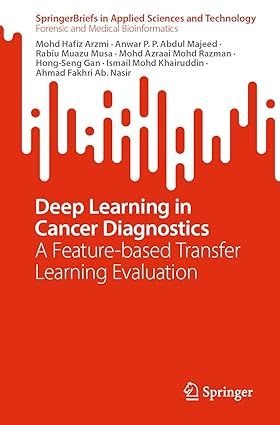
Deep Learning in Cancer Diagnostics, A Feature-based Transfer Learning Evaluation
Gostou do que leu? Veja o produto relacionado a este artigo.
Ver produtoFeatured Articles
Siga nosso instagram