





88 Keys Digital Piano Electronic Music Keyboard Professional Electric Piano Musical Instruments For Home Studio And Stage
08/07/202688 keys digital piano electronic music keyboard professional electric piano musical instruments for home studio and stage
The 88 keys digital piano is an essential tool for musicians, offering a versatile platform for creating and performing music. Ideal for both home studios and live stages, this electric piano combines technology with traditional piano features, making it a valuable addition for any music enthusiast.
Introduction with the best electric piano for home studio
In the digital age, finding the right instrument for your creative needs can be overwhelming. Whether you're a beginner or a seasoned musician, the best electric piano for home studio can significantly enhance your music production and performance experience. This article explores the features, benefits, and applications of the 88 keys digital piano, helping you understand how it can meet your musical aspirations.
What is an electric piano?
An electric piano is a musical instrument that combines the traditional feel of a piano with electronic technology. Unlike acoustic pianos, electric pianos produce sound through digital samples or synthesized sounds, allowing for a wide range of tones and effects. The 88 keys digital piano electronic music keyboard is designed to replicate the feel of an acoustic piano while providing the advantages of modern technology, such as portability, recording capabilities, and various sound settings.
For what purpose does it serve and what problems can it solve?
The primary purpose of the 88 keys digital piano is to enable musicians to create, perform, and record music with ease. It serves several key functions:
- Versatility: With a wide range of sounds and effects, it allows musicians to experiment with different styles and genres.
- Portability: Unlike traditional pianos, electric pianos are lightweight and easy to transport, making them ideal for home studios and live performances.
- Recording Capability: Many digital pianos come equipped with MIDI connectivity, allowing for seamless integration with music production software.
- Practice and Learning: The electric piano often includes features such as built-in metronomes and lesson modes, making it suitable for beginners.
- Sound Customization: Musicians can adjust the sound settings to suit their preferences, enhancing their creative process.
How does it work in practice?
The 88 keys digital piano operates through a combination of key sensors and digital sound generation. When a key is pressed, it triggers a sensor that sends a signal to the onboard computer, which then produces the corresponding sound. Here’s a breakdown of its functionality:
- Key Action: The weighted keys mimic the feel of an acoustic piano, providing a realistic playing experience.
- Sound Engine: The built-in sound engine generates high-quality audio samples, ensuring rich and dynamic sound output.
- Control Interface: Users can adjust various settings, such as volume, effects, and sound selection, through an intuitive interface.
- MIDI Connectivity: This feature allows the piano to connect to computers and other devices, facilitating music production and recording.
Key benefits
- Realistic Playing Experience: The weighted keys and responsive action provide a feel similar to that of an acoustic piano.
- Diverse Sound Options: Access to a variety of instrument sounds and effects expands creative possibilities.
- Compact and Portable: The lightweight design makes it easy to transport for performances or practice sessions.
- Affordable Alternative: Compared to traditional pianos, digital pianos offer a more budget-friendly option without sacrificing quality.
- Advanced Learning Tools: Built-in features for practice and learning support beginners in their musical journey.
Who is it suitable for?
The 88 keys digital piano is designed for a variety of users, including:
- Beginners: Ideal for those just starting their musical journey, providing an accessible way to learn and practice.
- Home Studio Musicians: Perfect for those looking to produce music at home, offering features that integrate well with recording software.
- Performing Artists: Musicians who perform live will benefit from its portability and diverse sound options.
- Music Educators: Teachers can use it as a teaching tool in classrooms, providing students with a modern learning experience.
- Composers and Producers: Those involved in music production will appreciate the MIDI connectivity and sound customization features.
Differentials and points that deserve attention
While the 88 keys digital piano offers many advantages, there are some considerations to keep in mind:
- Sound Quality: Ensure that the sound engine meets your expectations; some models may have limitations in audio fidelity.
- Key Sensitivity: Check for adjustable sensitivity settings to match your playing style.
- Durability: Look for models constructed with high-quality materials to ensure longevity.
- Learning Curve: Some features may require time to master, especially for beginners.
- Price Range: Consider your budget, as prices can vary widely based on features and brand.
Is it worth it? An analysis of the product within the presented proposal
The 88 keys digital piano is a valuable investment for anyone serious about music. Its combination of functionality, portability, and sound quality makes it an excellent choice for home studios and professional settings alike. When considering whether it’s worth the investment, think about your specific needs as a musician:
- If you need a versatile instrument to explore different genres, this electric piano is an excellent choice.
- For beginners, its features can aid in learning without overwhelming complexity.
- Musicians who perform live will benefit from its portability and diverse sound palette.
Frequently asked questions about the best electric piano for home studio
- What is the difference between an electric piano and a digital piano?
Electric pianos typically refer to instruments that use analog technology, while digital pianos use sampled sounds from acoustic pianos. - Can I use a digital piano for music production?
Yes, digital pianos often have MIDI capabilities, making them suitable for recording and producing music. - How do I choose the right electric piano?
Consider factors such as key action, sound quality, connectivity options, and your budget. - What are the advantages of weighted keys?
Weighted keys provide a more realistic playing experience, similar to that of an acoustic piano. - Is an electric piano suitable for beginners?
Yes, many electric pianos have built-in learning features that make them user-friendly for beginners. - Can I connect my electric piano to a computer?
Most modern electric pianos have MIDI outputs that allow you to connect to a computer for recording and editing music.
Conclusion
The 88 keys digital piano electronic music keyboard is an excellent choice for anyone looking to enhance their musical experience, whether at home or on stage. With its realistic feel, diverse sound options, and portability, it serves as a versatile tool for musicians of all levels. If you’re considering adding this instrument to your collection, you can explore more about it on the product page here.
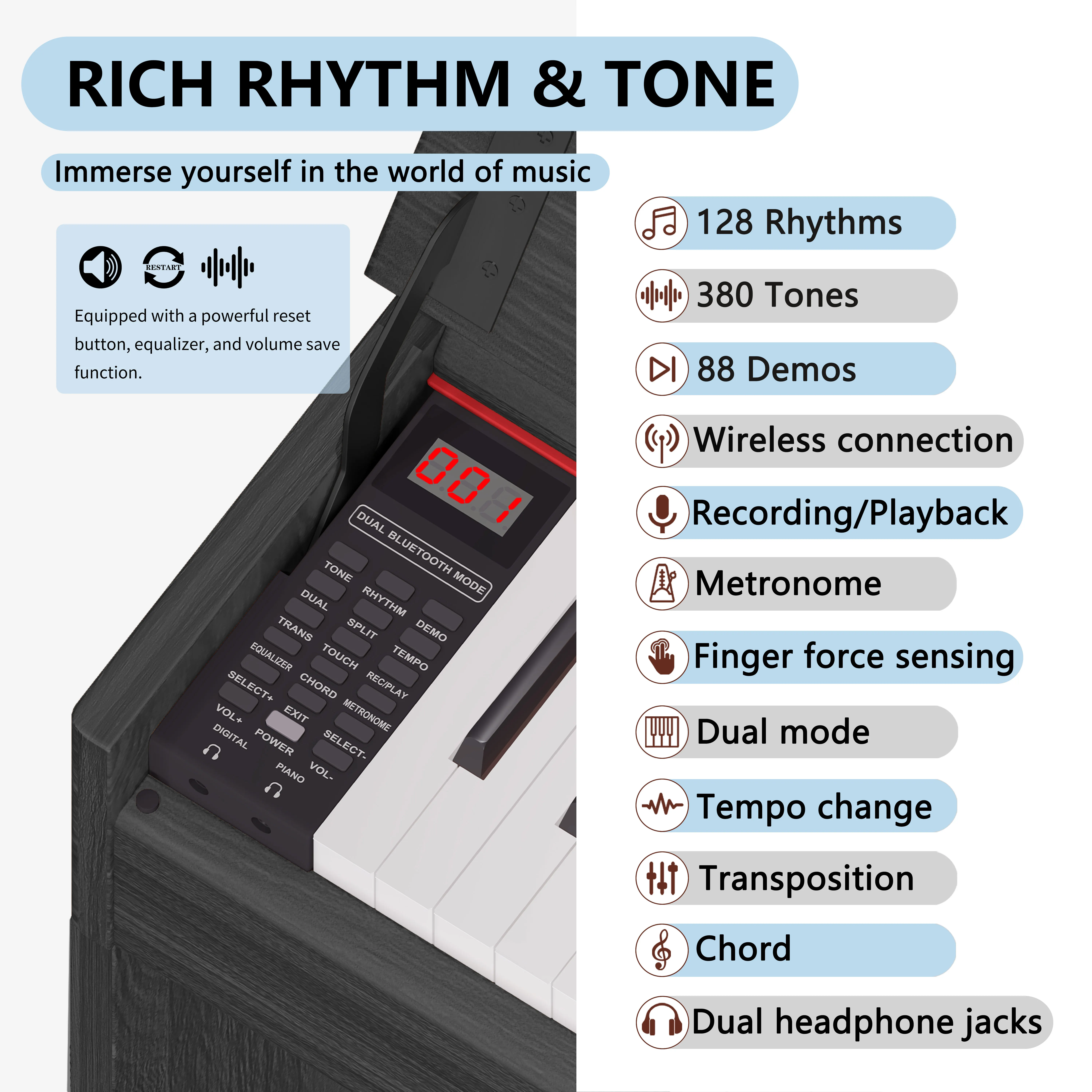
88 Keys Digital Piano Electronic Music Keyboard Professional Electric Piano Musical Instruments For Home Studio And Stage
Gostou do que leu? Veja o produto relacionado a este artigo.
Ver produtoFeatured Articles
Siga nosso instagram